
You are preparing your wedding in Saint-Malo and you come across this somewhat unclear administrative step: the publication of the banns. Specifically, it is a public display announcing your union project. This formality, mandated by the Civil Code, allows anyone who knows of a legal impediment to report it before the ceremony. In other words, the publication of the banns protects the validity of your civil marriage.
Marriage banns in Saint-Malo: a publication now available online
Traditionally, the banns are displayed on a board at the town hall. In Saint-Malo, the uniqueness lies in the digitization: the banns are also published on the municipal website, in addition to the physical display. Your relatives or witnesses living far from the municipality can therefore consult them remotely.
This dual publication (paper and digital) facilitates verifications, especially for weddings where the future spouses live in different municipalities. The civil status service of the town hall of each spouse’s residence must display the banns on their side. If one resides in Rennes and the other in Saint-Malo, the banns are published in both cities.
Before preparing your file, it is useful to check the publication of the marriage banns in Saint-Malo to understand the specific procedures for this municipality and anticipate the deadlines.
Deadline for publishing the banns and constraints for a civil marriage
The Civil Code stipulates that the banns must be displayed for at least ten days. The marriage ceremony can only take place after this period. In practice, the town hall requests that the complete file be submitted several weeks before the desired date, sometimes even more in highly sought-after municipalities.
Why can this deadline be extended in Saint-Malo? The city hosts a significant number of weddings for non-residents, known as “destination” weddings. The civil status services conduct cross-checks with the town halls of the future spouses’ residences to ensure there are no incomplete files or double marriages. These exchanges between municipalities can sometimes add several days to the planned schedule.

The marriage file includes several documents that the civil status officer reviews before launching the publication:
- A birth certificate issued within the last three months for each future spouse (six months if the certificate was issued by a consulate abroad)
- A valid identification document and proof of residence or domicile
- Information regarding the witnesses (identity, profession, residence)
- For a foreign spouse, a certificate of custom and possibly a certificate of marital capacity issued by the country of origin
Submitting an incomplete file automatically delays the publication of the banns. It is better to gather all the documents in advance.
Data protection and duration of online publication of the banns
You may be wondering how long your names will remain visible online? This question is worth asking. The recommendations of the CNIL regarding the online publication of civil status acts have led several town halls, including those of major tourist municipalities, to limit the duration of online publication of the banns compared to the paper display.
The goal is to reduce the risks of commercial reuse of personal data. Specifically, the banns may disappear from the municipal website more quickly than from the physical board at the town hall. If you wish to verify the publication, check the city’s website shortly after submitting the file rather than the day before the wedding.
The display at the town hall remains the legal reference. The online version is a complementary service, not a legal substitute. In case of doubt, a visit to the town hall or a call to the civil status service of Saint-Malo can confirm that everything is in order.
Opposition to marriage: who can act and within what timeframe
The publication of the banns is not just a symbolic formality. It opens a window during which a third party can file an opposition to the marriage before the civil status officer. This right is governed by the Civil Code.
Who can oppose? The list is limited:
- Ascendants (parents, grandparents) of one of the future spouses
- The spouse of a previous undissolved marriage (in cases of bigamy)
- The public prosecutor, if they identify a legal impediment
An unfounded opposition can be lifted by the judicial court. The opposition must be based on a specific legal reason, such as a prohibited kinship or a previous marriage still in effect. A simple family disagreement does not constitute a valid reason.
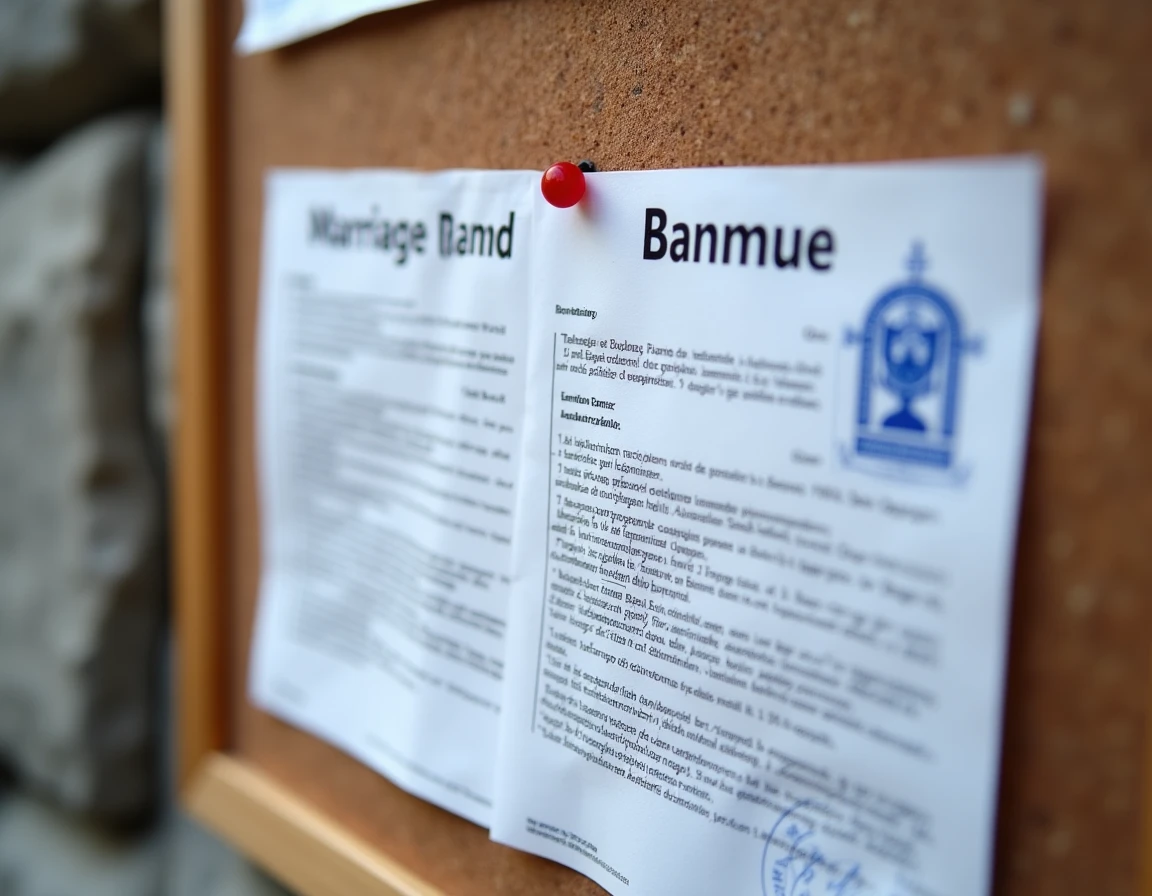
If no opposition is filed during the display period, the marriage can be celebrated. However, an irregular or absent publication can lead to the annulment of the marriage if a third party demonstrates that they were deprived of their right to oppose. This situation remains rare, but it justifies taking this step seriously.
For couples planning a civil marriage in Saint-Malo without residing there, communication with the civil status services of both municipalities of residence is the best guarantee of a controlled timeline. Cross-checks between town halls take time, and the summer periods, which are highly sought after on the coast, lengthen waiting times. Anticipating the submission of the file by several months remains the most effective reflex to avoid unpleasant surprises on the day of the ceremony.