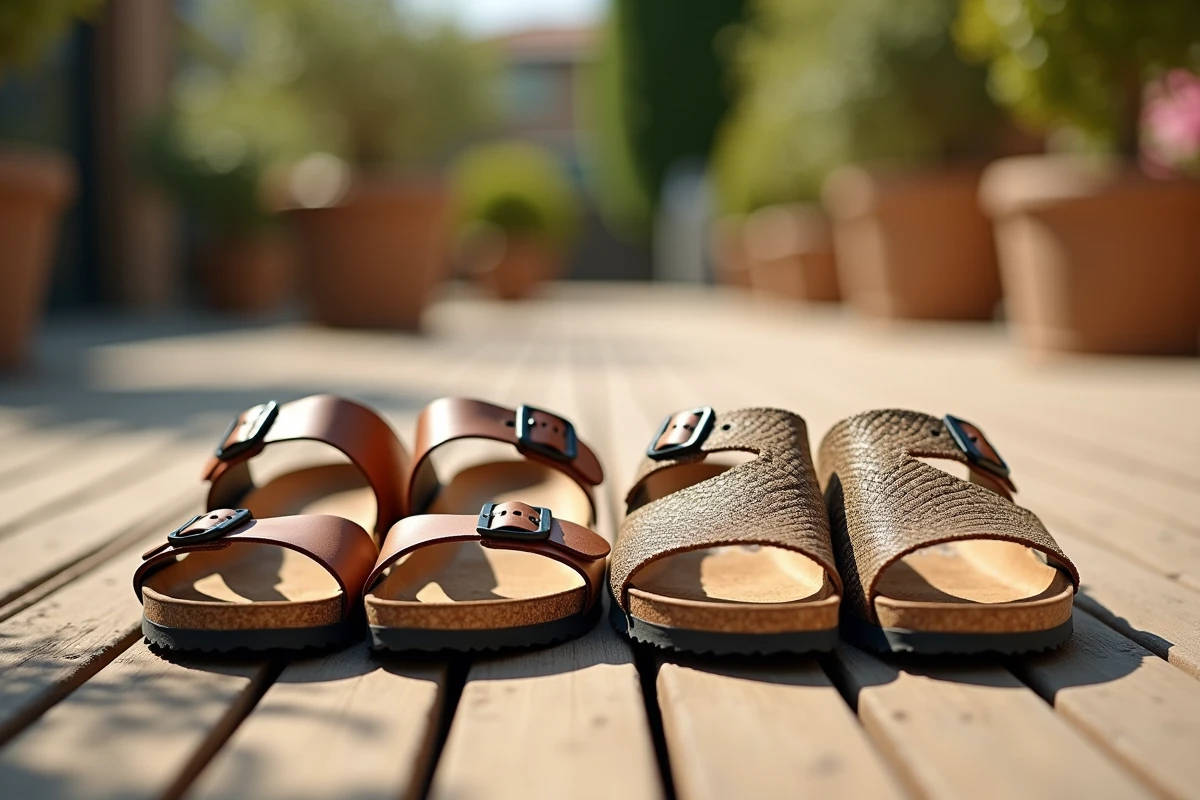
Are you looking for a pair of anatomical sandals to stand all day long, and two brands keep coming up: Bayton and Birkenstock. The choice between the two is not just a matter of logo. Materials, cushioning, durability, and price differ enough that the wrong option can lead to regret after a few weeks.
Cork sole and cushioning: what really changes underfoot
Birkenstock uses a footbed made of natural cork mixed with latex, molded to a shape that replicates the arch of the foot. This cork gradually deforms to fit the owner’s foot. After a few days of breaking in, the sole retains the imprint and offers personalized support.
Bayton also offers a cork footbed, but the composition differs. There is often a higher proportion of synthetic materials in the mix, which makes the sole a bit softer from the first wear. The break-in period is shorter, sometimes almost non-existent.
In practice, Birkenstock requires an adjustment period that Bayton shortens. Those who dislike the break-in phase where the sole feels hard will appreciate Bayton. Those who want arch support that improves over several months will lean towards Birkenstock. Feedback varies on this point, as the sensation of comfort remains very subjective from foot to foot.
To delve into the bayton or birkenstock differences and reviews on support and longevity of the soles, the detailed comparison helps to decide based on your morphology.

Material durability: leather, synthetic, and aging
The leather used by Birkenstock on its flagship models (Arizona, Boston, Madrid) comes from European tanneries. The upper ages by developing a patina, and the seams hold up well to repeated flexing. The outsole can be replaced by a cobbler or through the brand’s resoling service, which extends the lifespan of the pair.
Bayton primarily works with synthetic leather and vegan materials across a large part of its range. The result is a lighter sandal right out of the box. However, synthetic leather shows signs of wear sooner, especially at the straps that rub against the skin.
What wears out first
- On Birkenstock, the EVA outsole wears out before the leather upper. It can be replaced without discarding the pair.
- On Bayton, the synthetic straps may crack or discolor before the sole is worn out.
- Both brands share a common weak point: the exposed cork on the edge of the sole deteriorates quickly when in contact with water if not protected.
If you wear your sandals daily on varied surfaces (asphalt, gravel, hardwood), Birkenstock generally lasts longer. For occasional or summer use, Bayton fulfills the contract without straining the budget.
Birkenstock or Bayton: price versus actual use
Let’s not beat around the bush: Birkenstock is significantly more expensive. A smooth leather Arizona model falls into a price range significantly higher than that of a comparable Bayton model. The gap is partly justified by the materials, partly by the reputation of the German brand.
Bayton offers an interesting price-quality ratio for a first trial of anatomical sandals. You can test the concept without investing a significant amount. If the format suits you, you can then upgrade to Birkenstock knowing exactly what you’re looking for.
When Bayton is sufficient
For home and garden use, short outings in the city, or occasional vacations, Bayton does its job. The sole cushions adequately, the models come in various colors, and the lightweight design makes the sandal comfortable.
When Birkenstock is justified
As soon as the sandal becomes a daily shoe worn for several hours in a row, the natural cork of Birkenstock makes a difference over time. The arch support remains stable season after season. The possibility of resoling turns the purchase into a multi-year investment rather than a repeated expense every summer.
Style and range: two distinct positions
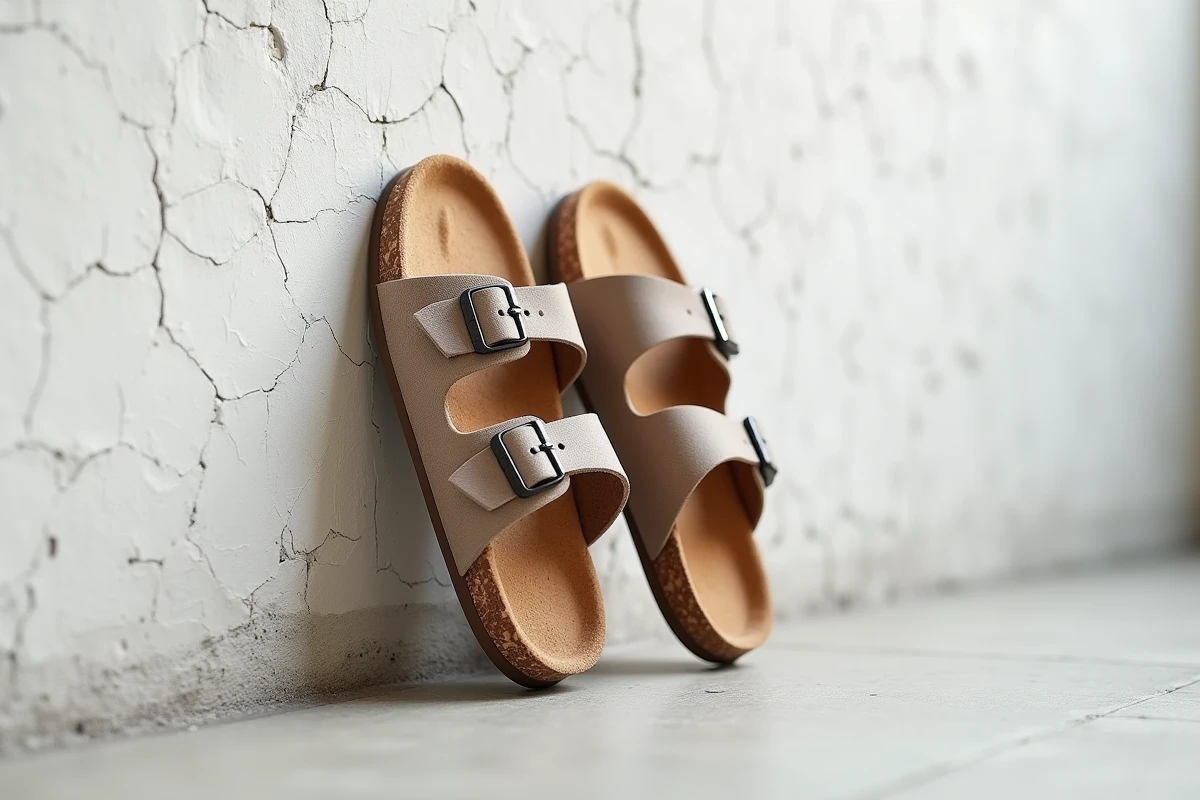
Birkenstock has built its catalog around iconic silhouettes. The two-strap Arizona, the Boston in clog version, the single-strap Madrid: these shapes have hardly changed for decades. The brand focuses on consistency and occasional collaborations with designers.
Bayton refreshes its range more frequently, with trendy colors, prints, and finishes that follow the seasons. The catalog targets a younger audience or simply those curious to vary styles without breaking the bank.
- Birkenstock: sober palette (black, brown, white, taupe), classic shapes, leather or nubuck.
- Bayton: extensive palette, metallic or textured finishes, vegan materials.
- Both brands offer unisex models, but Bayton segments its communication more between men’s and women’s collections.
The stylistic choice depends on what you expect: a versatile pair that lasts through the years, or sandals that you renew regularly to follow your desires.
The real dividing line between these two brands lies in the frequency of use. For intensive daily wear, Birkenstock remains the reference thanks to its natural cork and superior durability. To discover anatomical comfort at a lower cost or to vary styles each season, Bayton fulfills its role without claiming to compete on longevity. Your decision boils down to a simple question: how many days a week do you plan to wear them?