A poorly designed storage pouch increases the risk of loss or contamination of medical equipment. Commercial models often overlook the specific needs of healthcare professionals on the move. Some makeshift solutions hinder quick access to essential tools.
Strict constraints weigh on the creation of accessories intended for daily use in a hospital environment. The fabrics must withstand frequent and intense washing while remaining pleasant to handle. Safety and organization take precedence over aesthetics, but ergonomics cannot be compromised.
Why a well-thought-out pouch makes nurses’ daily lives easier
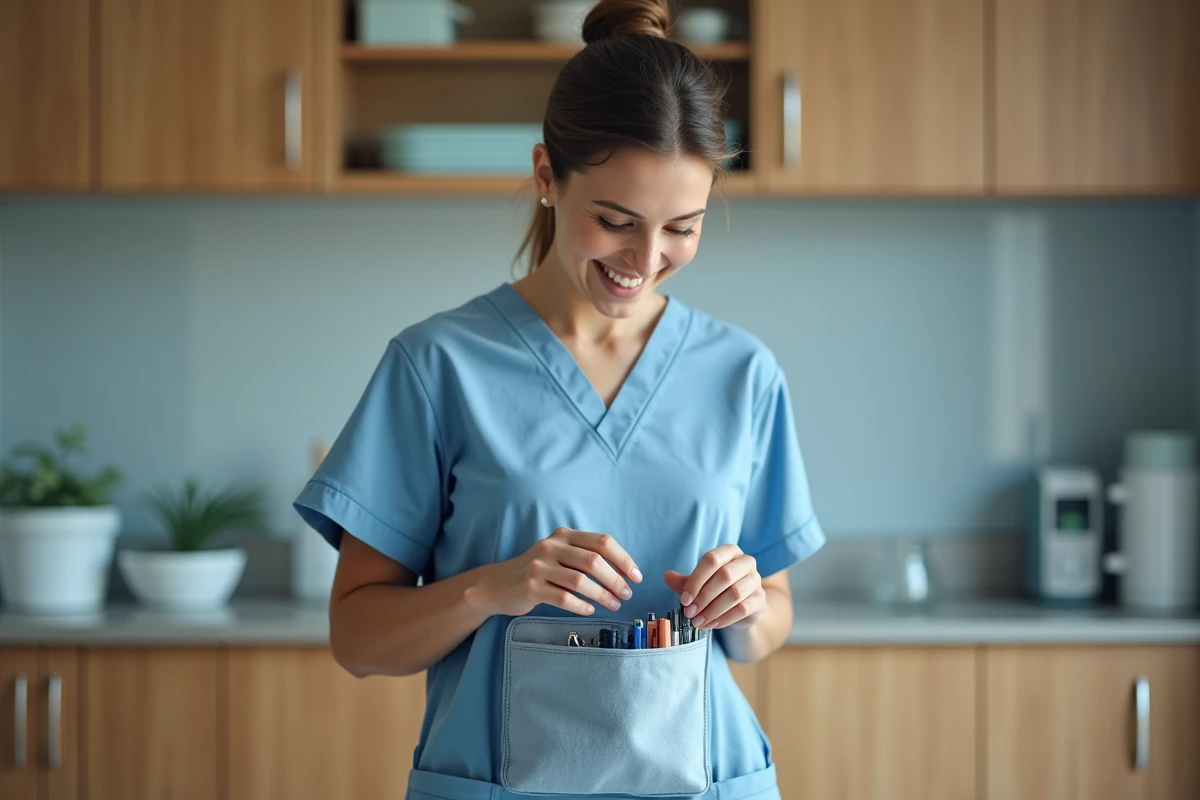
In hospital departments, every minute counts. The healthcare staff knows this better than anyone: the organization of equipment allows for no approximation. The nurse pouch is not just an accessory; it responds to the urgency of the field. Custom-designed at the request of Elodie, a nursing assistant, the Elo Nurse Pouch embodies this demand for practicality. Pens, scissors, phone: everything has its place in this discreet format, designed to accompany the comings and goings between two rooms. No detail is left to chance; each compartment is the result of careful observation of daily life at the CHU.
The nurses at the CHU have adopted these pouches tailored for their busy days. Their feedback is clear: less time wasted searching, more responsiveness to the unexpected. Over the course of their shifts, the nurse pouch becomes a trusted ally, always accessible, never intrusive. The equipment remains protected, and the professional appearance is enhanced.
Designing a nurse accessory requires precise choices. The item must endure repeated washing, resist wear, and protect both the contents and the user. Requested by Elodie, the author did not limit herself to assembling pieces of fabric: she thought through every seam, every separation, in direct dialogue with the caregivers. This attention to detail is reflected in the detailed sewing tutorial for nurse pouches, where each step aims to simplify the nurse’s daily life and enhance organization on the ground.
Which fabrics and accessories to prioritize for a practical and durable pouch?
Choosing the materials shapes the robustness of the accessory, but also its effectiveness. Faux leather naturally stands out: waterproof, strong against splashes, it protects the contents without adding weight. By pairing it with cotton fabric, you achieve a soft and pleasant structure without compromising on durability. This combination satisfies both lightness and the ability to withstand intensive washing.
To ensure the practicality of the pouch, it is worth focusing on the accessories to select:
- A magnetic closure system, which opens with a silent gesture, without slowing down the pace
- A simple, washable plastic snap, with no visible metal to limit corrosion
- Sew-on magnets, discreet and effective for understated designs
Beyond the choice of fasteners, internal organization makes a difference. A double compartment allows for the separation of pens, scissors, and phone. To protect sensitive documents, the plastic pocket proves invaluable. Bias tape finishes reinforce the seams, limit fraying, and increase longevity. For customization enthusiasts, flex or glittery fabric adds an original touch without compromising functionality.
Creating a pouch worthy of the profession requires paying special attention to every detail: the material, the accessory, the layout. Far from being a trivial choice, the quality of the fabrics and supplies structures the response to the real needs of care and the frequency of handling.
Detailed steps to easily sew your own nurse pouch
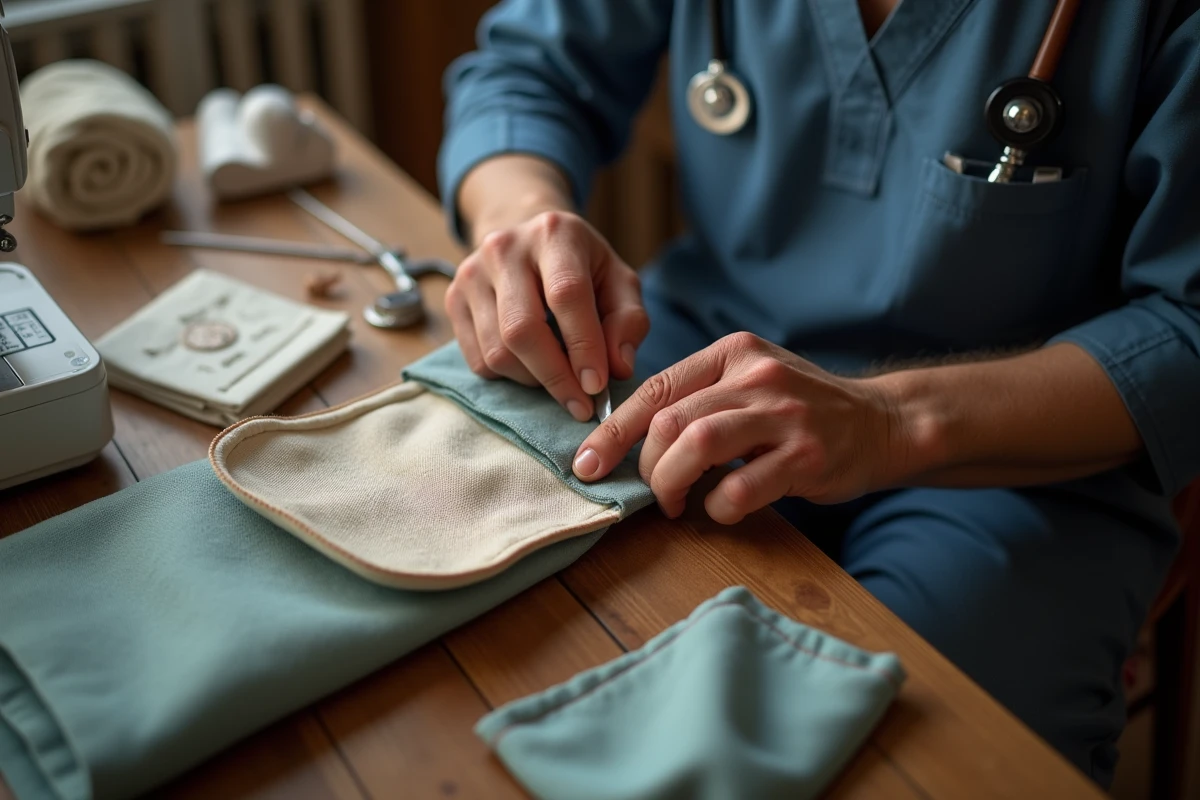
The adventure begins with gathering the main pieces: Piece A for the exterior, Piece B for the interior, Piece C for the flap, and Pieces A1 and B1 to organize the compartments. Each element is cut from a robust faux leather for the outer shell, and a coordinated cotton fabric for the interior. Also plan for bias tape for clean finishes, a magnetic closure or a plastic snap, and, if needed, a plastic pocket to keep documents safe from splashes.
The first step is to assemble the internal compartments: stack A1 on B1, sew the sides, then attach it all to Piece B. This arrangement allows for a clear separation between pens, scissors, and phone. Next, place Piece C (the flap) on the top of Piece A, right sides together, and sew. Before turning the whole thing right side out, insert the sew-on magnet or plastic snap: the closure should remain invisible and easy to access.
Next, bring together the exterior and interior, sliding in the plastic pocket if needed. Pin carefully, check the alignment of the corners. Sew all around, turn it right side out, then apply the bias tape to reinforce the seams and ensure a clean and durable finish. The result: a sturdy pouch designed for the fast pace of nursing daily life.
Want a personal touch? Add a pattern in flex or a hint of glittery fabric. The pouch created combines practicality and durability, in tune with the realities of healthcare staff. Between corridors and treatment rooms, it stands out as a discreet partner, ready to face the next emergency.